Skip to content
CONNECTIONS TO SUCCESS

The curriculum

A complete K-8 writing curriculum, one small step at a time.

Each genre study is a series of short video lessons covering the skills behind a strong essay: Generating ideas, finding credible sources, organization, voice, word choice, sentence fluency, conventions, peer revision, and editing.

Grades

PreK through 8th grade (ages 4-14)

Lesson length

Videos run 5-20 minutes, depending on the grade and lesson. There are about 5 lessons per genre study in kindergarten; while 8th grade can have up to 17 lessons.

Foundations

State standards (primarily Common Core), the Six Traits of Writing, the Writing Process and systematic instruction. Each lesson lists the standards it covers.

Genre studies

Four genres students need for state tests and beyond.

Narrative

  • Engage and orient the reader with a context, point of view, narrator, and characters
  • Organize an event sequence that unfolds naturally and logically
  • Use dialogue, pacing, description, and reflection to develop experiences and characters
  • Use transitions to show sequence and shifts in time or setting
  • Use precise words, descriptive details, and sensory language
  • Write a conclusion that reflects on the events or theme
Informative

  • Introduce a clear thesis statement while engaging the reader
  • Organize ideas into categories with headings
  • Develop the topic with facts, definitions, details, quotations, and examples from credible sources
  • Follow MLA format to quote and paraphrase to avoid plagiarism
  • Use precise language, domain-specific vocabulary, and a formal style
  • Write a conclusion that supports the thesis

Opinion/Argument

  • Attempt to be unbiased and research a topic
  • List claims of both sides
  • Choose a side and write a claim
  • Support the claim with logical reasoning and relevant evidence from credible sources
  • Address counterclaims
  • Follow MLA format to cite sources
  • Use transitions to connect claims, counterclaims, reasons, and evidence
  • Establish and maintain a formal style
  • Write a conclusion with a suggestion or call to action

Literary Analysis (for grades 6-8)

  • Respond to a text with a clear, arguable claim
  • Support analysis with evidence quoted and paraphrased from the text
  • Explain how the evidence supports the claim
  • Organize the essay with an introduction, body paragraphs, and conclusion
  • Maintain a formal style
  • Use strong and accurate vocabulary
  • Apply sentence fluency, beginning sentences differently, and using accurate transitions

The engaging lessons give the modeling, practice, and tools students need to be successful in completing the small tasks independently. After each lesson, they are encouraged to consult with a peer and receive feedback. Start a free trial to see every lesson available for your grade.

What's included

Everything students and teachers need

Video lessons
Kim models every step. Students pause, write, and share with a partner.
Grading program
Students find the rubric evidence in their own essay, which holds them accountable. Teachers score faster and see trends by trait and each student's progress across assignments.
Student-friendly rubrics
Color-coded and short, so students can check their own work
Model papers
A sample essay builds lesson by lesson so students see the target.
Revision and editing templates
Peer checklists that keep partner feedback focused
Pre- and post-assessments
Measure growth from the start of a genre study to the end
Quizzes
Quick true/false or multiple-choice checks after each lesson
Printable handouts
Rubrics and checklists students can use to follow along
Word choice lists
Reference lists such as strong verbs to use instead of “said”
Beginner writing templates
Picture-and-lines pages for PreK-1 writers, ready to print
Grading · Maya R. · “Should Middle Schools Require Community Service?”

Some people argue that students already have too many responsibilities, and adding community service might create unnecessary stress. This is a reasonable concern. However, schools could require a manageable number of service hours each semester and allow students to choose activities that interest them. Giving students choices would make the requirement more flexible and enjoyable.

Rubric · 1-4

  • Idea ×21234
  • Organization1234
  • Voice1234
  • Word Choice1234
  • Sentence Fluency1234
  • Conventions1234
Score89%

Adapt it to your class

Flexible for every classroom

  • Play videos whole-class, in small groups, or assign them individually.
  • Students adjust playback speed.
  • Teachers choose essay topics and due dates, and can change them anytime.
  • Assign genre studies in any order and repeat them as often as you like.
  • Assign partners or have a few students share with the class during “Share It”.
  • Turn videos and quizzes on or off, and choose right/wrong or 1-4 rubric scoring.* The purpose of turning off the video lessons would be for using the grading program only.
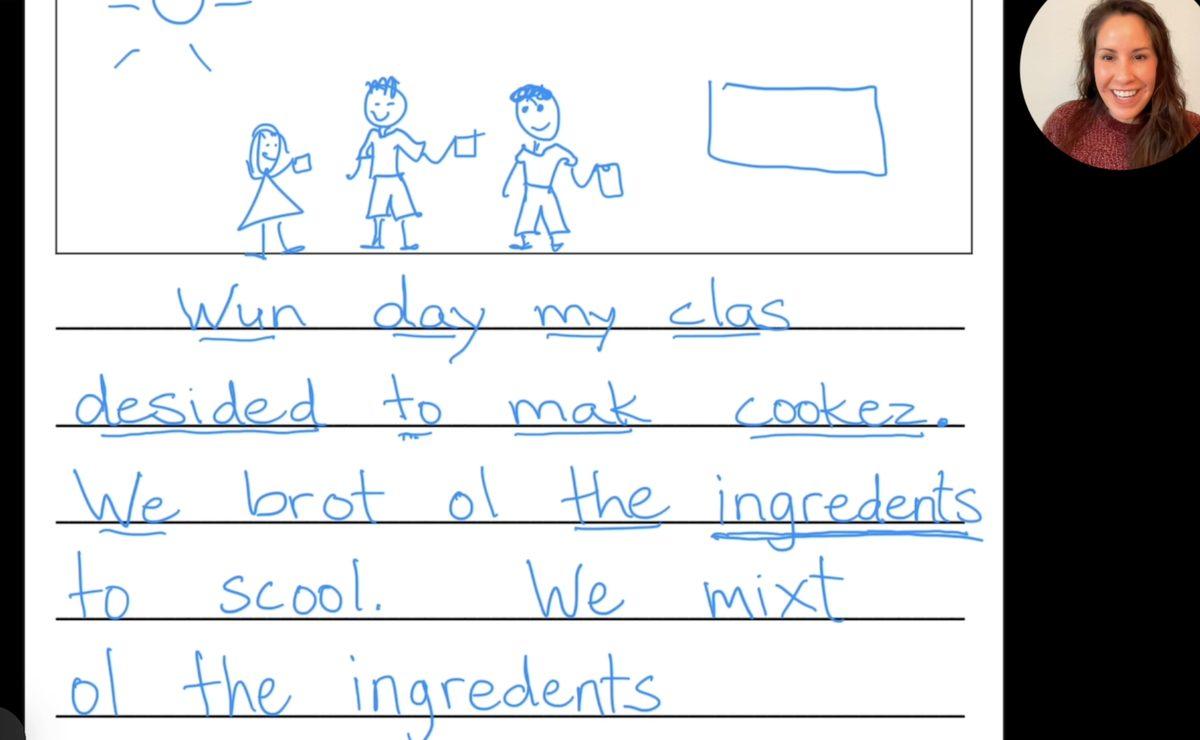
Kim modeling a kindergarten story on a writing template: a drawing above and the sentences “Wun day my clas desided to mak cookez” written on the lines below
From a kindergarten narrative lesson: Kim encourages phonetic spelling.

Beginning writers

Building strong foundations

In the early grades, Kim models sounding words out and writing phonetically. High-frequency words and spelling rules are taught gradually, so that students build a firm foundation of phonetic spelling. This builds students' self-confidence and independence in expressing their thoughts without worrying about whether they're using correct spelling.

Printable beginner templates are included. For handwriting practice, add the Letter & Sentence Formation manual.

Try EDCON free for 30 days.

Set up a class in minutes. No credit card, no IT setup, no lesson planning.

Start Free TrialBook Demo